Why Soft Tailoring Has Replaced the Traditional Suit for Men
Blog
6 min read
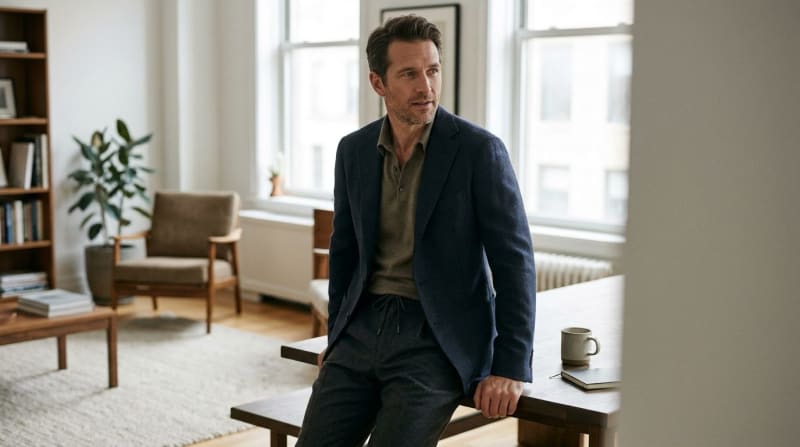
Menswear trends for spring and summer favor functionality and individual styling over rigid rules, according to Vogue, marking a clear move away from prescriptive dressing. Soft tailoring has officially superseded the traditional suit because unconstructed jackets and relaxed wool trousers project genuine executive presence through ease rather than artificial stiffness. Modern professional authority relies on poise and physical comfort rather than heavy canvas padding.
For decades, tailoring operated as defensive clothing. Padded shoulders, stiff horsehair chest canvases, and rigid waistbands forced wearers into an unnatural, upright posture designed to signal corporate compliance. As working environments evolved into flexible, cross-functional spaces, the heavy two-piece suit began to feel less like a mark of distinction and more like workplace theater.
The Decline of Armored Dressing
Rigid corporate suiting was engineered for an era when conformity equaled competence. The sharp, broad shoulders of mid-century boardrooms were designed to create an imposing silhouette regardless of the wearer's actual physique. That structured armor served a purpose when offices demanded visual homogeneity, but modern workplaces prioritize adaptability and personal expression.
When hybrid schedules and digital meetings decentralized the traditional office, men quickly realized that sitting at home or traveling between co-working hubs in a stiff worsted wool two-piece felt performative. The stark contrast between functional everyday wear and corporate tailoring exposed how uncomfortable traditional suiting had always been. Stiff fused interfacings, restrictive sleeveheads, and suffocating collars no longer conveyed power; they conveyed discomfort.
True executive presence today is defined by composure rather than stiffness. When a professional enters a boardroom without the crutch of heavy shoulder pads, he communicates self-assurance. Looking natural in one's clothes signals that authority comes from within, which is why an unstructured jacket has become the foundational building block for modern leadership attire.
Architecture of Unstructured Construction
The shift toward soft tailoring is rooted in superior engineering and thoughtful material choices. Traditional jackets depend on internal architecture: haircloth, chest pieces, shoulder pads, and synthetic linings that trap heat and restrict range of motion. Unstructured jackets eliminate these unnecessary layers, allowing the cloth to drape naturally over the body's contours without artificial boxing.
Removing the internal lining requires far higher sewing standards, as every interior seam is exposed and must be neatly bound. Garments built this way frequently incorporate open-weave high-twist wools, linen-silk blends, and breathable hopsack fabrics that resist creasing while facilitating natural airflow. In an online discussion regarding hot-weather suiting, one Reddit poster sought a lightweight, unstructured blazer with enough flexibility to avoid the restricted arm movement common to thick wool coats.
The lower half of the silhouette has undergone an equally radical and overdue transformation. Tailored wool trousers with an internal drawstring deliver the impeccable drape of four-ply flannel or tropical worsted wool alongside the effortless comfort of loungewear. By integrating hidden interior ties and discreet side elastic into high-rise, single-pleated trousers, tailors have eliminated the binding pressure of traditional fixed waistbands. The result is fluid motion that lets professionals focus entirely on execution instead of adjusting their clothing.
Modular Wardrobe Versatility
Soft tailoring operates as an adaptable ecosystem of interchangeable separates rather than an immovable two-piece set. The stiff dress shirt and silk necktie have given way to fine-gauge merino knit polos, tailored tees, and brushed cotton button-downs worn with an open collar. A deconstructed navy or charcoal jacket transitions from a morning strategy session directly to an evening dinner without requiring an intermediate wardrobe change.
This flexibility transforms the economics of a closet. Traditional structured suits sit unworn for months between formal events, depreciating in utility. Soft separates, by contrast, rotate seamlessly across varied settings, offering practical alternatives to traditional business suit purchases. At Paris Men's Fashion Week, retail buyers emphasized that buying decisions are increasingly driven by versatility and wearability rather than trend-driven pieces, reflecting a universal demand for modular utility.
| Feature | Traditional Corporate Suit | Modern Soft Tailoring |
|---|---|---|
| Shoulder Design | Padded, roped, structured | Natural, soft, unpadded (spalla camicia) |
| Interior Lining | Fully lined in synthetic cupro | Unlined or quarter-lined with bound seams |
| Waistband | Rigid, requiring belt or fixed braces | Drawstring, side-adjusters, or elastic inserts |
| Primary Base Layers | Stiff poplin dress shirts, neckties | Merino knit polos, fine crewnecks, open-collar shirts |
| Daily Versatility | Limited to formal office settings | Modular; pieces wear effortlessly as separates |
Wearing relaxed tailoring successfully comes down to balancing texture and volume. Pairing a deconstructed hopsack blazer with pleated trousers and suede loafers maintains clean lines while feeling entirely unconstrained. In our guide to 2026 men's fashion trends, Elegant Years highlights that contemporary menswear prioritizes softer tailoring, rich textures, and versatile garments that bridge formal and casual settings.
Dismantling the Sloppy Silhouette Myth
Traditionalists often argue that abandoning shoulder pads, rigid waistbands, and neckties invites sartorial laziness. That critique conflates soft tailoring with sloppy athleisure. Soft tailoring does not mean wearing oversized sweatpants and tech-fleece hoodies into a professional meeting. Instead, it adapts centuries-old Neapolitan tailoring traditions that prioritize precision draping, bespoke proportions, and exceptional natural fabrics.
The distinction lies entirely in the cut and fabric quality. A pair of well-cut wool trousers with an internal drawstring still holds a razor-sharp crease and breaks cleanly over leather dress shoes. A soft jacket still retains a balanced lapel roll, neat waist suppression, and an intentional shoulder seam. When an employee in the City of London asked for advice on work suit alternatives in a Reddit forum, a commenter suggested pairing a textured navy odd jacket with chinos or flannels.
Wearing a heavily armored corporate suit in a casualized work world can project an aura of insecurity. It suggests that a person requires an external costume to command authority. Conversely, soft tailoring demonstrates that the wearer understands the contemporary room: smart, collected, and unfazed by outdated corporate protocol.
Building a Modern Soft Uniform
Transitioning toward a relaxed wardrobe requires auditing existing suits and identifying gaps in versatility. Men should begin by retiring fused, heavily padded jackets in favor of an unlined suit jacket cut from mid-weight hopsack navy or charcoal wool. These fabrics drape cleanly, resist wrinkles during travel, and pair just as well with dark denim as they do with pleated trousers.
Next, replace flat-front, restrictive trousers with single-pleat wool trousers featuring side adjusters or hidden waist ties. A pair of drawstring trousers in medium gray flannel or taupe wool pairs naturally with suede slip-ons, white leather tennis sneakers, or Goodyear-welted loafers. Investing in tactile textures like open-weave wool, brushed flannel, and linen blends will ensure that the unlined garments hold their shape through years of daily wear.
Adopting a softer tailoring philosophy allows professionals to build a functional, enduring rotation that outlasts fleeting fashion cycles. Readers building an adaptable work wardrobe can explore the curated capsule frameworks at The Elegant Years Journal to assemble balanced separates for business travel and daily wear. True style in menswear has moved beyond rigid performance: it now belongs to the men who look entirely at home in what they wear.